KRA is strengthening eTIMS stock management requirements for businesses that hold inventory. Learn what this means for purchases,
Tax Updates
 By Oswago & Associates
October 01, 2026
KRA eTIMS Stock Management in Kenya: What Businesses Need to Know in 2026
By Oswago & Associates
October 01, 2026
For many Kenyan businesses, eTIMS has primarily been associated with issuing electronic tax invoices. However, businesses that hold stock now need to pay closer attention to another important area: eTIMS stock management and the records supporting the movement of goods through the business.
On 7 September 2026, the Kenya Revenue Authority (KRA) issued a public notice on the implementation of stock management functionality for electronic invoicing. KRA stated that taxpayers engaged in business are required to maintain accurate and up-to-date stock records while using TIMS/eTIMS.
This development makes eTIMS stock management in Kenya particularly important for retailers, wholesalers, distributors, hardware stores and other businesses that regularly purchase, hold and sell physical goods.
So, what does eTIMS stock management mean for your business, and what should you start reviewing in your records?
What Has KRA Announced About eTIMS Stock Management?
KRA’s September 2026 notice places emphasis on maintaining accurate stock records that account for goods as they move through a business.
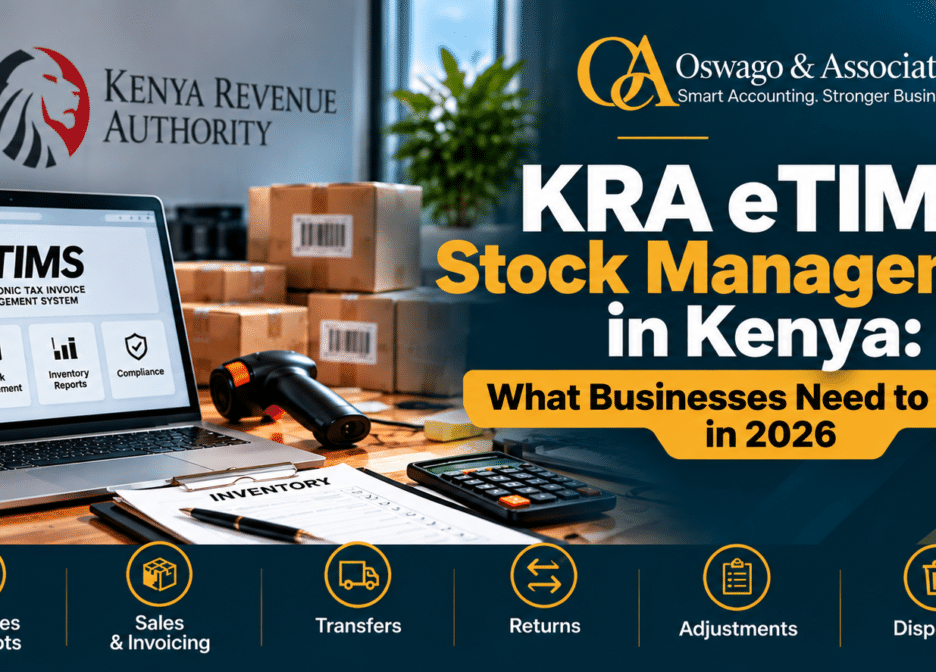
According to KRA, stock records should account for goods that are:
- Purchased or received;
- Sold;
- Transferred;
- Returned;
- Adjusted; or
- Otherwise disposed of during the course of business.
This means stock management is not simply about knowing how many units are sitting on a shelf. A business should be able to understand how inventory entered the business, what happened to it and how the resulting stock balance was reached.
KRA has indicated that accurate stock management is intended to support tax compliance and improve the accuracy of tax returns and reporting.
Key takeaway:
Businesses carrying stock should increasingly be able to explain the movement of inventory from purchase or receipt through to sale, transfer, return, adjustment or disposal.
Is Stock Management Completely New to eTIMS?
Not entirely.
KRA’s existing eTIMS information already identifies a stock management module as one of the system’s features. KRA’s eTIMS documentation also includes stock-related functions covering areas such as stock inventory, stock by item, stock-in history, stock-out history and stock movements.
What makes the September 2026 announcement particularly important is KRA’s renewed emphasis on maintaining accurate and up-to-date stock records while using TIMS/eTIMS, together with the implementation of stock management functionality for electronic invoicing.
What Does eTIMS Stock Management Mean for Kenyan Businesses?
For businesses that hold stock, the practical question is whether the movement of goods through the business can be supported by reliable records. Effective eTIMS stock management therefore begins with understanding what stock came in, what went out and why the recorded balance changed.
Consider a hardware business that begins the month with 100 units of an item, purchases another 50 units and records sales of 80 units.
Opening stock: 100 units
Add: Purchases: 50 units
Less: Sales: 80 units
Expected closing stock: 70 units
Suppose the physical stock count shows only 64 units. The six-unit difference needs to be investigated.
The difference could arise from damaged goods, transfers, returns, recording errors, unrecorded transactions or another legitimate stock movement.
This example is an accounting illustration rather than a formula prescribed by KRA. The important point is that a business should have records capable of explaining why its physical stock and recorded stock differ.
5 Areas Businesses Should Start Reviewing
1. Purchases and Goods Received
Businesses should ensure that goods purchased or received are properly recorded. Purchase invoices, supplier records and goods received should be capable of supporting the quantities entering the business.
2. Sales and Stock Leaving the Business
Sales should correctly reflect the goods leaving the business. Where inventory records and sales records operate separately, businesses should pay particular attention to whether the two can be reconciled.
3. Stock Transfers
Businesses operating multiple branches, warehouses or storage locations should properly document transfers between locations.
A transfer does not necessarily represent a sale, but the movement still needs to be reflected in the business’s inventory records.
4. Customer and Supplier Returns
Returns should not be handled informally. Goods returned by customers or sent back to suppliers can affect both inventory quantities and the underlying accounting records.
5. Stock Adjustments and Disposals
Damaged, expired, lost or otherwise disposed stock should be appropriately documented. Adjustments should have identifiable reasons and supporting records rather than being used simply to force the system balance to match a physical count.
Good practice:
When a physical stock count differs from the recorded quantity, investigate the cause of the difference before making an adjustment.
Why Your Accounting Records Still Matter
eTIMS stock management should not be treated as a substitute for proper bookkeeping.
A business may issue electronic invoices correctly but still have unreliable inventory information if purchases are not properly recorded, stock movements are undocumented or physical counts are never reconciled to the accounting records.
For management purposes, businesses should therefore be able to compare information across:
- Purchase records;
- Sales records;
- Inventory records;
- The accounting system; and
- Physical stock counts.
Good records do more than support compliance. They can help management understand gross margins, identify slow-moving stock, detect losses, improve purchasing decisions and understand how much cash is tied up in inventory.
What About Businesses Using QuickBooks, Zoho Books or ERP Systems?
Businesses already using accounting or inventory systems should review how their existing stock records relate to their invoicing and eTIMS processes.
The objective should not be to maintain several disconnected sets of records.
Instead, management should understand how purchases, sales and inventory movements flow between operational records, the accounting system and electronic invoicing processes.
KRA provides different eTIMS solutions, including system-to-system integration options for businesses whose circumstances require them. The appropriate setup will depend on the size and complexity of the business and the eTIMS solution being used.
Has KRA Finalised Every Detail of the Implementation?
This is an important distinction.
KRA’s 7 September 2026 notice states that it will undertake consultative engagement forums with businesses and other stakeholders to support smooth and practical implementation.
According to KRA, the consultations are intended to explain how the functionality works, receive implementation challenges and recommendations, and inform appropriate enhancements.
Important:
Businesses should rely on official KRA guidance rather than assuming that every operational detail circulating online represents a final KRA requirement.
While implementation details continue to develop, businesses can still take a practical step now: ensure that their underlying inventory and accounting records are accurate and capable of explaining stock movements.
What Should Businesses Do Now?
Businesses carrying inventory do not need to wait for a compliance problem before reviewing their records. Preparing for eTIMS stock management starts with ensuring that the underlying stock information is reliable.
Start by checking whether:
- Your opening stock balances are reliable;
- Purchases and goods received are properly recorded;
- Sales consistently reduce the appropriate inventory;
- Returns and stock transfers are documented;
- Damaged, lost or otherwise disposed stock is accounted for;
- Stock adjustments have explanations and supporting records; and
- Physical stock counts can be reconciled with recorded quantities.
Where large unexplained differences exist, investigate them rather than simply adjusting the system to make the figures agree.
Better Stock Records Are Also Better Business Records
The significance of eTIMS stock management goes beyond tax compliance.
A business that knows exactly what it has purchased, sold and currently holds is better positioned to manage working capital, monitor margins, identify losses, plan purchases and make informed pricing decisions.
For many growing Kenyan businesses, the current KRA development is therefore also an opportunity to strengthen the connection between inventory management, bookkeeping and tax compliance.
Frequently Asked Questions About eTIMS Stock Management
What is eTIMS stock management?
eTIMS stock management refers to functionality associated with maintaining and tracking inventory information within KRA’s electronic invoicing environment. KRA has emphasised the need for businesses to maintain accurate and up-to-date records of stock movements.
Which businesses should pay attention to eTIMS stock management?
Businesses that purchase, receive, hold and sell physical goods should pay particular attention. This can include retailers, wholesalers, distributors, hardware businesses and other inventory-based businesses.
Should physical stock match the quantities in my records?
Businesses should regularly compare physical stock with recorded quantities. Where differences exist, the cause should be investigated and appropriately documented.
Does eTIMS replace an accounting or inventory system?
Businesses still need reliable bookkeeping and inventory records. Accounting or ERP systems may continue to play an important role in managing purchases, sales, inventory, reconciliations and financial reporting.
What should I do if my stock records are currently inaccurate?
Start by establishing reliable opening quantities, reviewing purchases and sales, performing a physical stock count and investigating significant differences. Businesses with substantial historical discrepancies may benefit from a structured inventory and bookkeeping review.
Source & Update Note: This article reflects KRA guidance available as of 1 October 2026. KRA has indicated that stakeholder consultations form part of the implementation process, and further guidance may be issued.
Official source: Kenya Revenue Authority – Implementation of the Stock Management Functionality for Electronic Invoicing.
NEED HELP WITH YOUR RECORDS?
Get Your Stock and Accounting Records Under Control
If your inventory records, bookkeeping system and eTIMS information do not reconcile properly, Oswago & Associates can help you review your current records, identify gaps and strengthen your financial controls.
Book a Financial Review